
 Conference System
 Amplifier
.webp) Speaker
Speaker
 Portable Speaker
 Microphone
 Megaphone
 Mixer
Mixer
 EVAC
EVAC
.webp) Zone Selector
Zone Selector
 Professional Speaker
 IP PA System
 Other
Other
Conference System Price in Bangladesh
Conference System Price in Bangladesh is starts from price 0.00 BDT to 360000.00 BDT; depending on brand, capacity, and features. Buy best quality Conference System from renowned brands like Verbex, Ahuja, TOA, Bosch, CMX, HTDZ, ITC from PA System BD Online Shop and browse below to place online order.
.webp)
- The microphone light ring shows the working status;
- Unique patented conference seat arc streamlines
- design, beautiful and generous;
- No noise touch switch design, flexible operation;
- 128*64LCD dot matrix screen, display unit identity, speaking mode, speaking status;
Price: 7,500
.webp)
- Chairman unit for Conference
- Priority to speak Button
- Built Light working status
- No noise touch switch design
- Built in Speaker
Price: 8,500
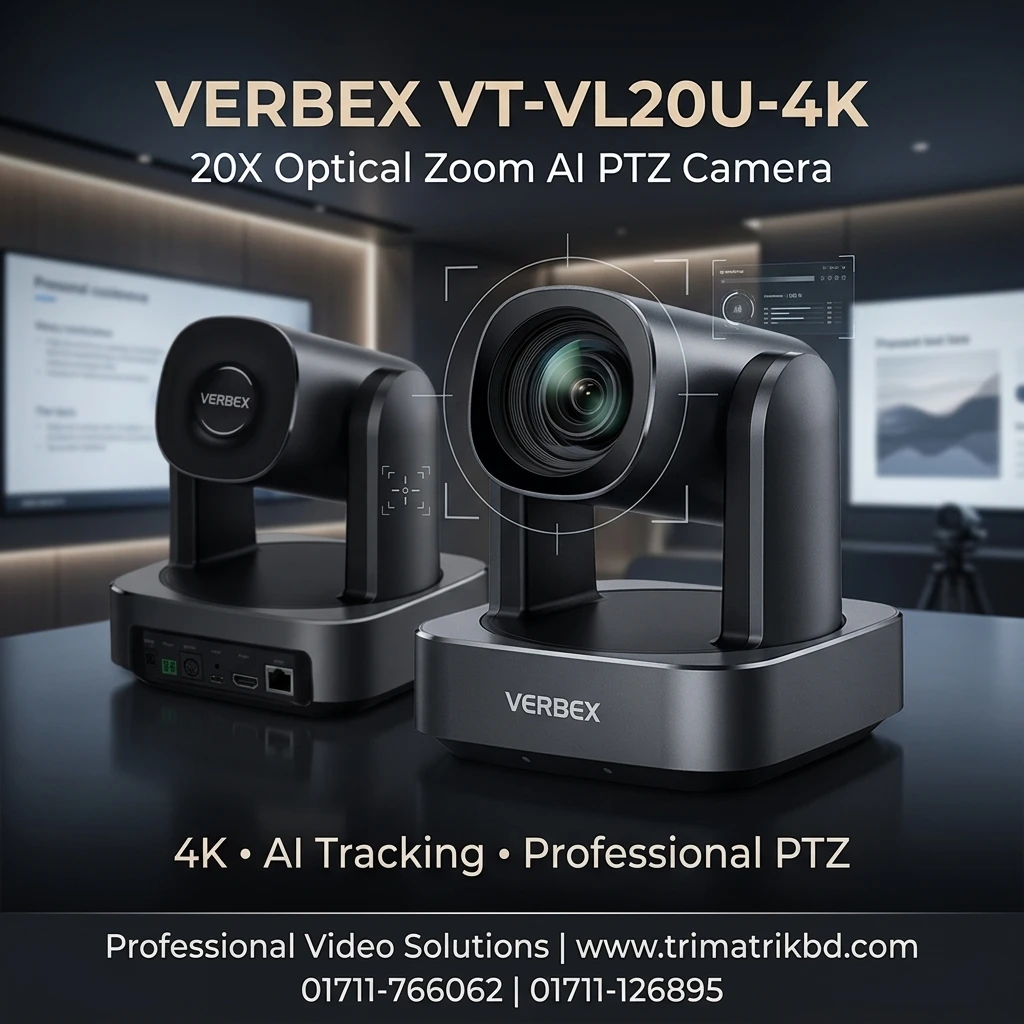
- 20X Optical Zoom
- AI-Powered Smart Tracking
- PTZ Pan-Tilt-Zoom Control
- 4K Ultra-HD Video
- Professional Video Conferencing & Broadcasting
Price: 0
.webp)
- LCD screen liquid crystal menu displays the work content, intuitive and clearly;
- High power output
- Multiple input channels
- Zone control
- Digital signal processing
Price: 35,000
.webp)
- Compact & lightweight
- Built Light working status
- No noise touch switch
- Built in Speaker
- Country of Origin: UAE
Price: 12,000
.webp)
- Elegant Design
- Priority to speak Button
- Built Light working status
- Built in Speaker
- Country of Origin: UAE
Price: 13,000
.webp)
- Model: HTDZ HB-350d
- Sensitivity: -42dB±2dB
- Length of gooseneck: 390mm
- Support discuss and video
- Built-in speaker
Price: 7,950
.webp)
- High power output
- Multiple input channels
- Digital signal processing
- Support 180 conference units
- Country of Origin: UAE
Price: 40,500
.webp)
- 01 × HT-3000 Central Amp
- 01 × HB-350C Chairman
- 15 × HB-350D Delegate
- 01 × Extension Cord
- Installation & Delivery Exclud
Price: 1,75,000
.webp)
- Input Voltage: 240V/50Hz~60Hz
- Protect the LIP battery
- Equipped handle and pulley
- Charge 16 battery synchronously
Price: 0

- Model: HTDZ HT-7500d
- Frequency: 40Hz~16kHz
- Sensitivity: -42dB ±2dB
- Distance: 15-50cm
Price: 0
.webp)
- Built-in control loudspeaker
- Video Camera auto-track.
- Designed accordance to ISO & IEC 914 Standards
- Support 60 units, extend 250
Price: 0
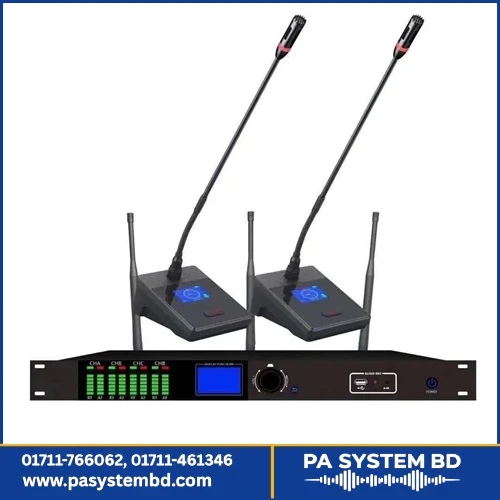
- Fully Digital Wireless Technology
- Multiple Conference Modes
- Professional Audio Processing
- Easy Installation & Expansion
- Centralized Conference Control
Price: 1,30,000
.webp)
- TALK switch with LED
- PRIORITY switch with LED
- Delegate unit for Conference
- Compact and lightweight
- Built in Speaker
Price: 15,500
.webp)
- Frequency: 40-16000Hz
- Sensitivity: -42±2dB
- Distance: 20-120cm
- Built-in speaker
Price: 9,800
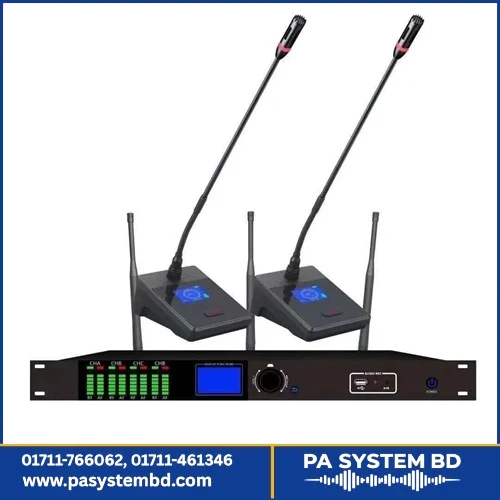
- Frequency stability: +-0.001%
- Signal-to-noise ratio: S/N: >85dB
- Distortion THD: <0.01%
- Microphone power consumption: 120mAh
- UHF frequency range: 600MHz- 700MHz
Price: 24,500
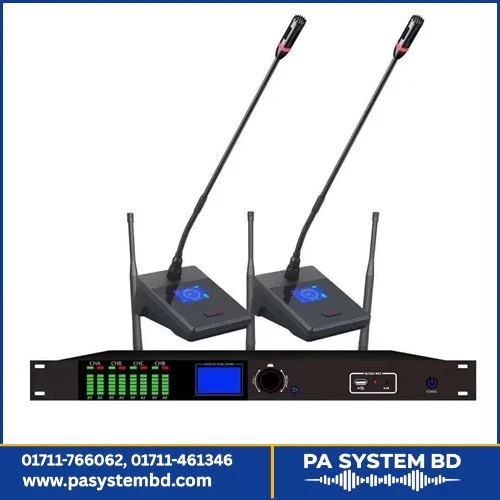
- Frequency stability: +-0.001%
- Signal-to-noise ratio: S/N: >85dB
- Distortion THD: <0.01%
- Microphone power consumption: 120mAh
- UHF frequency range: 600MHz- 700MHz
Price: 23,500
.webp)
- ISO and IEC914 standards
- High power output
- MIC on number restriction
- Digital signal processing
- Support 70 conference units
Price: 0
.webp)
- 30 USB ports
- Charge 30 conference microphones
- Output port maximum current 1A
- Overvoltage protection
- Overcurrent protection
Price: 26,000
.webp)
- TALK switch with LED
- PRIORITY switch with LED
- Chairman unit for Conference
- Compact and lightweight
- Built in Speaker
Price: 16,200
Latest Conference System Price in Bangladesh (BD) 2026
The demand for modern conference systems in Bangladesh is rapidly increasing as businesses, corporate offices, government organizations, educational institutions, and event management companies prioritize efficient communication and professional meeting environments. The latest conference system price in Bangladesh in 2026 varies depending on system type, brand, features, and scalability requirements. Conference systems are designed to streamline discussions, improve audio clarity, and enhance collaboration in boardrooms, seminar halls, auditoriums, and large-scale conferences. These systems typically include chairman units, delegate microphones, central control units, amplifiers, speakers, and optional wireless or digital integration features. In the Bangladesh market, conference system pricing depends on several key factors such as wired or wireless configuration, number of participants supported, audio processing technology, and additional features like voting, interpretation, recording, and camera tracking integration. Entry-level conference systems are suitable for small meeting rooms, while advanced digital conference systems are tailored for large enterprises and government projects. Wireless conference systems are gaining strong traction due to easy installation, flexibility, and reduced cabling costs. On the other hand, wired conference systems remain a cost-effective and reliable solution for permanent installations where long-term stability is required. Organizations looking for conference system solutions in Bangladesh should consider scalability, audio quality, system compatibility, and after-sales support before making a purchase decision. Investing in a high-quality conference system ensures long-term operational efficiency, improved communication flow, and a professional meeting experience. For the latest conference system price in Bangladesh (BD) 2026, including bulk installation, customized solutions, and corporate project support, it is recommended to consult with professional suppliers who can provide end-to-end design, supply, and installation services based on specific business requirements.
What is a Conference System?
A conference system is an integrated audio communication solution designed to facilitate structured discussions, meetings, and decision-making processes in professional environments. It enables multiple participants to communicate clearly in a controlled setting, ensuring that every speaker is heard without distortion, interruption, or background noise.
Modern conference systems are widely deployed across corporate boardrooms, government institutions, educational facilities, auditoriums, and international conference venues. These systems are engineered to deliver high-quality audio transmission, enhance meeting productivity, and support seamless collaboration.
A typical conference system includes components such as microphones (chairman and delegate units), central control units, amplifiers, speakers, and optional peripherals like cameras, interpretation modules, and voting systems. Depending on operational requirements, systems can be configured as wired, wireless, or fully digital IP-based solutions.
How Does a Conference System Work?
From an operational standpoint, a conference system functions through a centralized architecture where all audio inputs are processed, managed, and distributed efficiently.
At the core of the system is the central control unit (CCU), which acts as the command hub. All microphones are connected to this unit either through cables (wired systems) or wireless transmission (RF/WiFi-based systems). When a participant speaks into a microphone, the audio signal is transmitted to the control unit, where it is processed for clarity, noise reduction, and prioritization.
The processed signal is then routed to output devices such as speakers or integrated sound systems, ensuring that all participants in the room can hear the speaker clearly. In advanced systems, the CCU can also manage:
- Microphone activation control (priority, queue, or open mode)
- Audio mixing and equalization
- Feedback suppression and echo cancellation
- Integration with video conferencing platforms
- Recording and live streaming capabilities
Chairman units typically have priority control, allowing moderators to manage discussions effectively by overriding or muting delegate microphones when necessary. This ensures structured communication flow, especially in formal meetings or conferences.
Types of Conference Systems
Conference systems can be categorized based on technology and application:
Wired Conference Systems
These systems use physical cabling to connect all components. They are known for stability, minimal interference, and cost efficiency. Ideal for permanent installations such as boardrooms and government offices.
Wireless Conference Systems
Wireless systems eliminate complex cabling, offering flexibility and faster deployment. They operate using RF, infrared, or WiFi technologies. Suitable for temporary setups, rental businesses, and dynamic environments.
Digital Conference Systems
Digital systems provide superior audio quality, advanced control features, and seamless integration with IT infrastructure. These are commonly used in high-end corporate environments and international conferences.
IP-Based Conference Systems
These systems operate over network infrastructure, enabling remote participation, scalability, and integration with unified communication platforms.
Who Uses Conference Systems?
Conference systems are widely adopted across multiple industry verticals due to their efficiency and scalability.
Corporate Sector
Large enterprises and SMEs use conference systems in boardrooms, meeting rooms, and training facilities to ensure professional communication during internal and external meetings.
Government and Public Sector
Parliament sessions, municipal meetings, and administrative discussions rely heavily on structured conference systems for transparency and order.
Educational Institutions
Universities, colleges, and training centers use these systems in lecture halls and seminar rooms to improve communication between speakers and audiences.
Event Management Companies
Conference systems are essential for managing large-scale events, seminars, and corporate gatherings.
Religious and Community Centers
Places of worship and community halls use conference systems for speeches, discussions, and organized communication.
How to Make a Conference System (Basic Concept)
Building a conference system requires a structured approach that aligns with technical requirements and user expectations. While professional systems are typically procured from established manufacturers, understanding the core development concept is essential.
Core Components Required
- Microphones (gooseneck or boundary type)
- Central control unit or audio mixer
- Amplifier
- Speakers
- Cabling or wireless transmission modules
- Power supply
Basic Workflow
- Audio Input: Microphones capture voice signals from participants.
- Signal Processing: The control unit or mixer processes audio signals for clarity.
- Distribution: The processed signal is sent to speakers or recording systems.
- Control Mechanism: Software or hardware interface manages microphone priority and system settings.
Advanced Integration
To elevate a basic system into a professional-grade solution, additional modules can be integrated:
- DSP (Digital Signal Processing) for noise reduction
- Video conferencing integration
- Camera tracking systems
- Voting and interpretation modules
- Network-based control systems
Conference System Setup Process
A well-executed setup process is critical to ensuring optimal system performance and long-term reliability.
Step 1: Requirement Analysis
Define the scope of the project, including room size, number of participants, type of meetings, and required features.
Step 2: System Design
Develop a system layout that includes microphone placement, speaker positioning, and control unit configuration.
Step 3: Equipment Selection
Choose appropriate hardware based on performance requirements, scalability, and budget considerations.
Step 4: Installation
- Install microphones at designated positions
- Connect all components to the control unit
- Set up amplifiers and speakers
- Ensure proper cable management or wireless configuration
Step 5: Configuration
- Set microphone modes (FIFO, priority, or open)
- Adjust audio levels and equalization
- Configure feedback suppression and echo cancellation
Step 6: Testing and Calibration
Conduct full system testing to ensure clear audio transmission, proper synchronization, and stable operation.
Step 7: Training and Handover
Provide operational training to users and ensure proper documentation for system management.
Key Benefits of a Conference System
From a strategic perspective, deploying a conference system delivers measurable value:
- Enhanced communication clarity
- Structured meeting flow
- Improved decision-making efficiency
- Reduced operational disruptions
- Scalable infrastructure for future expansion
- Professional brand image during meetings and events
Frequently Asked Questions (FAQ)
What is the difference between a conference system and a PA system?
A conference system is designed for interactive communication where multiple participants speak and engage. A PA system is primarily used for one-way communication, such as announcements.
Which is better: wired or wireless conference system?
Wired systems offer higher stability and are cost-effective for permanent setups. Wireless systems provide flexibility and are ideal for temporary or dynamic environments.
How many microphones can be connected to a conference system?
The number depends on the system capacity. Entry-level systems may support 10–20 units, while advanced systems can handle hundreds of participants.
Can a conference system integrate with video conferencing platforms?
Yes, modern digital and IP-based systems can integrate seamlessly with platforms like Zoom, Microsoft Teams, and other unified communication tools.
What is the lifespan of a conference system?
With proper maintenance, a high-quality conference system can operate efficiently for 5–10 years or more.
Is technical expertise required to operate a conference system?
Basic systems are user-friendly and require minimal training. Advanced systems may require technical support for configuration and maintenance.
What factors affect conference system price in Bangladesh?
Key factors include system type (wired/wireless), brand, number of units, features, and installation complexity.
Can conference systems be expanded later?
Yes, most modern systems are scalable and allow additional units and features to be integrated as requirements grow.
Conclusion
A conference system is no longer a luxury but a critical infrastructure component for organizations aiming to streamline communication and enhance operational efficiency. Whether deployed in corporate environments, government institutions, or large-scale events, the right system delivers long-term value through improved collaboration, professionalism, and scalability.
For organizations in Bangladesh, investing in a well-designed conference system aligned with business objectives ensures not only seamless communication but also a competitive edge in an increasingly connected and performance-driven environment.
.webp)
.webp)